Understanding SBRT for Prostate Cancer
By: David Grew MD MPH
"SBRT allows many patients with prostate cancer to complete radiation treatment in just five highly focused sessions."
∗ ∗ ∗
If you have been told that you will receive SBRT for prostate cancer, you may be wondering what makes this treatment different from other types of radiation.
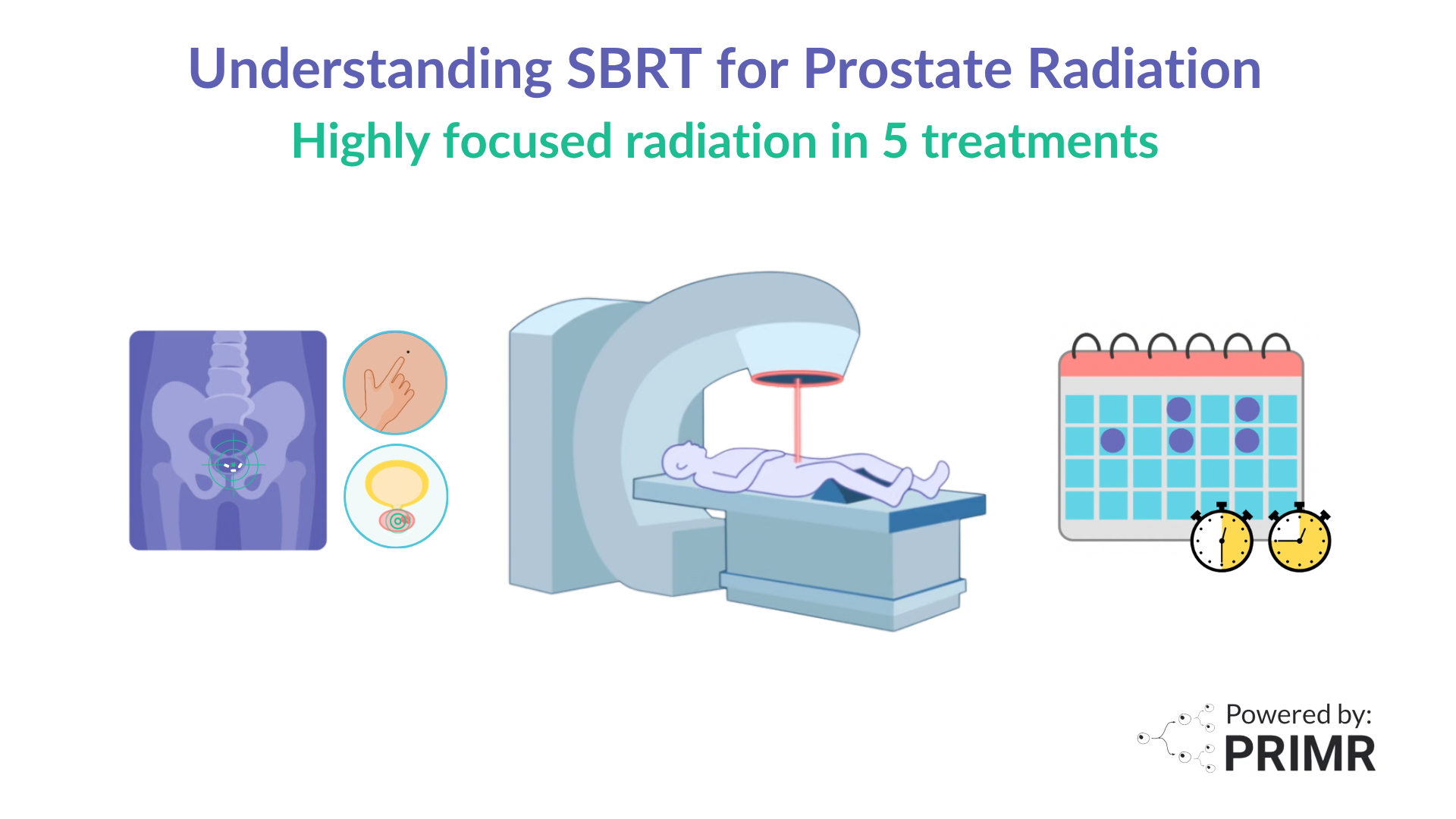
SBRT, or stereotactic body radiation therapy, is a highly focused form of radiation that delivers a larger dose during each treatment session. For many patients with localized prostate cancer, treatment can be completed in just five sessions rather than over several weeks.
The goal is the same as with other forms of radiation therapy: treat the cancer effectively while limiting radiation exposure to nearby healthy tissues such as the bladder and rectum.
How does SBRT work?
Radiation therapy uses high-energy beams to damage the DNA inside cancer cells. Once those cells are damaged enough, they can no longer grow and divide normally.
The effect is not immediate. Cancer cells can continue to die for weeks or even months after radiation treatment is finished.
SBRT uses advanced treatment planning and imaging to deliver radiation very precisely to the prostate. Because each treatment delivers a higher dose than traditional radiation schedules, accuracy is especially important.
Why can SBRT be given in only five treatments?
Traditional prostate radiation was often delivered in many small treatments over several weeks.
Research has shown that, for appropriately selected patients, prostate cancer can also be treated effectively with fewer treatments using larger doses of radiation each time. SBRT takes this approach further by delivering treatment in about five sessions.
A large randomized study called PACE-B found that five-session SBRT provided cancer control comparable to longer radiation schedules for many patients with low- and intermediate-risk prostate cancer.
Not every patient is treated with SBRT, however. Your radiation oncologist will consider factors such as the stage and risk level of your cancer, your anatomy, urinary symptoms, previous treatments, and overall health when recommending a radiation approach.
What happens before SBRT begins?
Before your first treatment, you will usually have a planning appointment called a simulation.
During simulation, imaging scans are taken to show the exact position of the prostate and nearby organs. Your radiation team uses these images to design a treatment plan specifically for you.
Depending on the treatment center, you may also have small permanent skin markings or other reference points to help reproduce your position during each visit.
Some patients may have additional preparation procedures before simulation, such as placement of fiducial markers or a rectal spacer. These are not needed for every patient, and your care team will tell you if they are part of your treatment plan.
Why do bladder and bowel preparation matter?
Your prostate does not stay in exactly the same position all the time.
Changes in how full your bladder or rectum is can cause the prostate and nearby organs to shift slightly. Because SBRT is so precise, your care team may ask you to follow specific instructions before each treatment.
These commonly include having:
- a comfortably full bladder
- a relatively empty rectum
A full bladder can help move some healthy tissues away from the treatment area, while an empty rectum can help keep the prostate in a more consistent position.
Your treatment center will give you specific instructions about drinking water, bowel preparation, or diet if needed. Try to follow those instructions as closely as possible.
What happens during an SBRT treatment?
SBRT for prostate cancer is commonly delivered in five treatments over about one to three weeks, although schedules can vary.
At each visit, you will lie still on a treatment table while the radiation team positions you carefully.
Imaging is usually performed before treatment to confirm the location of the prostate and nearby organs. This is sometimes called image-guided radiation therapy.
Once everything is aligned properly, the machine delivers radiation from different angles around the body.
You will not see or feel the radiation itself. You may hear the treatment machine moving around you, but the treatment is painless while it is being delivered.
The entire appointment may take around 30 to 45 minutes, although the actual time the radiation beam is on is usually much shorter.
Will I be radioactive after SBRT?
No. SBRT is a type of external beam radiation therapy. The radiation comes from a machine outside your body and does not remain inside you after the treatment is finished.
You can safely be around other people after your appointment, including children and pets.
What side effects can happen?
Many people tolerate prostate SBRT well, but side effects can occur.
Common short-term effects may include:
- needing to urinate more often
- feeling a stronger or more urgent need to urinate
- mild burning with urination
- a weaker urine stream
- looser bowel movements
- increased gas or bowel frequency
- fatigue
These symptoms can build gradually during treatment or shortly afterward.
For many patients, they improve over the following weeks or months. Your care team can recommend medications or other strategies if symptoms become bothersome.
Can side effects happen later?
Yes. Some effects of radiation therapy can appear months or even years after treatment.
Late effects may involve urinary, bowel, or sexual function. Serious long-term complications are uncommon, but they are possible.
That is why follow-up remains important even after the five SBRT treatments are finished. Tell your care team about new or changing urinary, bowel, or sexual symptoms, even if they begin long after treatment.
What happens after SBRT?
After treatment, you will have follow-up visits with your cancer care team.
One important part of follow-up is monitoring your PSA level. PSA usually decreases after radiation, although it may take time to reach its lowest level because the prostate remains in place after treatment.
Your doctor will look at the pattern of PSA changes over time rather than relying on a single result.
Follow-up visits are also an opportunity to discuss urinary, bowel, or sexual symptoms and ask questions about recovery.
Why patients may choose SBRT
One of the most obvious advantages of SBRT is convenience. Completing radiation in five treatments can mean fewer trips to the treatment center and less disruption to work, family responsibilities, and daily life.
But convenience is not the only reason SBRT is used.
Modern imaging and radiation technology allow doctors to deliver highly focused radiation while limiting exposure to surrounding tissues. Long-term clinical studies have also shown that SBRT can provide excellent cancer control for appropriately selected patients.
The right treatment still depends on the individual. SBRT is one of several effective approaches to prostate cancer, and your care team can help you understand how it compares with other options in your situation.
–
SBRT allows many patients with prostate cancer to complete radiation treatment in just five highly focused sessions.
Although the treatment schedule is short, there is a great deal of planning and imaging behind each treatment. Your radiation team carefully maps the prostate, monitors its position, and limits radiation exposure to nearby healthy tissues as much as possible.
If SBRT has been recommended for you, ask your care team what your treatment schedule will look like, how you should prepare before each session, and which side effects they want you to report.
–
To learn more, watch this video we made on Understanding SBRT for Prostate Cancer.
To learn more about prostate cancer, browse our dedicated prostate cancer education library for more information.
Hire PRIMR to create custom video content for your clinical trial or medical product today.
FAQs:
Is SBRT as effective as longer courses of radiation for prostate cancer?
Yes, for many appropriately selected patients. Large clinical trials have shown that five-treatment SBRT can provide cancer control comparable to longer radiation schedules for many patients with localized prostate cancer. That does not mean SBRT is the best option for everyone. Ask your radiation oncologist whether your cancer risk group and overall health make you a good candidate.
Does SBRT hurt while it is being delivered?
No. You cannot feel the radiation beam itself. The main challenge during treatment is usually lying still while the team completes imaging and delivers the radiation. If lying flat is uncomfortable or you have pain that makes positioning difficult, tell your care team before treatment so they can help.
Can I drive myself home after an SBRT treatment?
Usually, yes. SBRT itself generally does not require anesthesia or sedation, so many patients can drive themselves to and from treatment. However, your situation may be different if you are receiving other medications or procedures at the same visit. Ask your treatment team if you have any concerns about transportation.
Can I continue working or exercising while receiving prostate SBRT?
Yes, in many cases. Many patients continue their usual daily activities during treatment, although fatigue or urinary and bowel symptoms may make some activities less comfortable. Listen to your body, and ask your care team whether you need to modify exercise, work, or other activities based on your symptoms.
Does my PSA go to zero after prostate SBRT?
Usually, no. Unlike surgery, radiation leaves the prostate gland in place, and normal prostate cells can continue to produce some PSA. PSA typically decreases gradually after radiation rather than immediately falling to zero. Your doctor will follow the trend over time and explain what changes are expected in your situation.
Other Posts
.png)
.png)